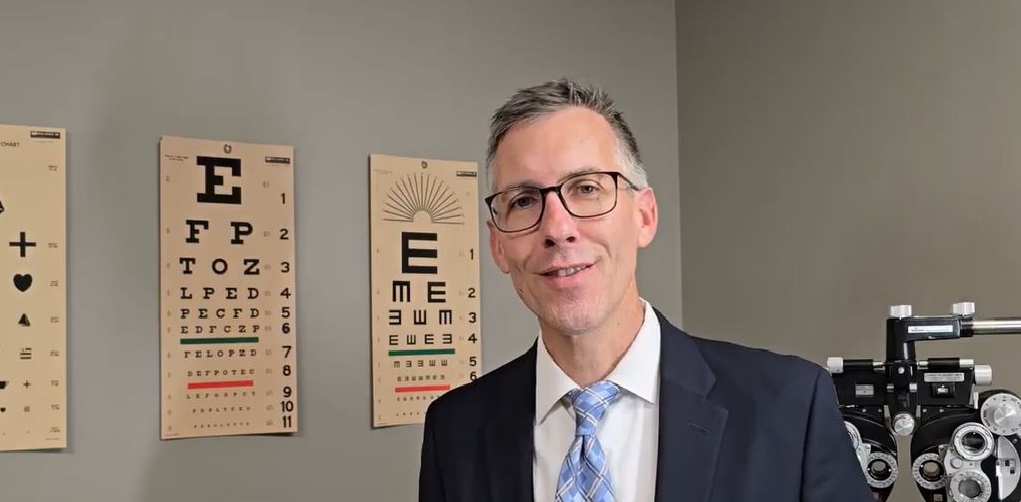
Image of Dr. Long speaking in a video about "Not Blind Enough": Blindness is a Spectrum

“Not Blind Enough”: Low Vision and Blindness are a Spectrum

A common frustration seen online, and one that I have heard many times in my own practice, is a patient saying “I’m not blind enough.” This may be the person expressing their own feelings, or it could be the patient repeating what someone said to them. On its face, this may seem like an unusual statement to make, but it actually reflects a very real and disheartening experience for people with low vision: a lack of understanding of what “blindness” actually means, and the resulting lack of support that people in this “gray zone” often experience. If this sounds all-too-familiar, this message is for you.

What Does “Not Blind Enough” Mean?

When people say they’re “not blind enough,” what they usually mean is this: they have too much vision to qualify for services, but not enough vision to function the way others seem to, or the way they used to function before they had visual impairment. They’re stuck in a gray zone between “disabled” and “normal”—because the vision loss isn’t always visible, others question it, whether silently or outright. Over time, that external doubt creeps in, and patients start questioning themselves. They tell me they feel like they’re overreacting, like they’re asking for help they don’t deserve, or like they should just try harder. And that emotional toll of not being seen, believed, or validated is very real, and one of the most overlooked parts of having low vision.

Blindness is a Spectrum: What Does Low Vision Mean?

From a medical standpoint, low vision is not about being legally blind, and it’s not about a single measurement on an eye chart. Low vision is about how your vision works or doesn’t work in real life despite glasses, contacts, surgery, or medical treatment. Clinically, low vision can mean decreased clarity of vision, reduced contrast, blind spots, glare sensitivity, poor night vision, or loss of peripheral vision in everyday life. What that looks like in day-to-day life is missing faces in a crowd, struggling in stores, airports or dim lighting, bumping into people or objects, not being able to read a menu, or feeling exhausted just trying to keep up.

What Can These Feelings Lead To?

When people live in this gray zone, something fairly predictable seems to happen—they start to withdraw. They stop going out, they stop asking for help, and they stop pursuing services that could actually help them function better, which often leads to social isolation and not getting the support they need.

Help for Those in the Gray Zone

To get through the day-to-day, some patients report carrying a cane or wearing a “visually disabled” button, not because they need these tools, but because they feel it gives other people permission to understand they have a disability.

Long-term, low vision care may help. And I want you to hear this message clearly: If your vision is interfering with your daily life, your reading, your mobility, your confidence or your independence, you are not imagining it, and you are not overreacting. You do not have to be legally blind to benefit from low vision care. You are blind enough to consider options that can help.

So talk to a low vision specialist. Learn more on our website, visit the International Academy of Low Vision Specialists website, or simply Google “low vision.” Help exists all over the world, and you deserve access to it.

An older man is squinting and looking beyond his glasses trying to read his screen representing an article about what is low vision

What is Low Vision Exactly?

What is Low Vision Exactly?

It’s common to hear someone with vision challenges described as “legally blind,” “partially sighted,” or “low vision,” among other phrases. The difference among these terms, however, can be a bit confusing. “Legally blind,” for example, is a legal classification, while “partially sighted” and “low vision” describe how well a person can use their remaining vision. “Low vision,” in particular, focuses on functional vision—meaning, how well your eyesight allows you to do the things that matter most to you—whether that is reading, driving, recognizing faces, or just navigating day-to-day tasks. Understanding what low vision really means can help clarify who falls under this classification, who may want to seek treatment, and how to find the right care or tools to make the most of that person’s sight.

A Practical Definition of Low Vision

Low vision, by my definition, and the definition of many of my colleagues, is vision that is insufficient to do what you want to do, or want to be able to do. It is not a measurement of your level of visual acuity—so it’s not 20/50, it’s not 20/80. It is not a definition of legal blindness or being partially sighted. Those are classifications used for documentation, benefits, and specific eligibility standards.

Low vision is more functional than technical. For example, if you have a hard time reading messages on your phone, recognizing faces, seeing street signs, or completing tasks at work because of reduced vision—even with glasses or contacts—then you may have low vision.

Low vision does not mean just nearsightedness or farsightedness. It can take a variety of forms, including:

  • Central vision loss: This means that the object of focus is missing. A person with central vision loss looking at someone’s face would only see the ears and shoulders, but not the face itself. Or if you look at a clock, you may see the numbers, but not the hands.
  • Peripheral vision loss: Peripheral vision loss, also known as tunnel vision, describes when you can only see objects directly in front of you and not at the sides of your vision.
  • Blurred vision: This means that everything looks out of focus, like looking through a foggy window. Even with glasses or contacts, details may still appear hazy.
  • Reduced contrast sensitivity: This refers to having difficulty distinguishing between colors or objects that are similar in color or brightness, particularly in low light conditions.
  • Night blindness: A person with night blindness has difficulty seeing at night or in dim light, such as when walking into a dark room or driving at nighttime.

Causes of Low Vision

Low vision is due to a number of causes. The most common medical causes of low vision are generally age-related, with macular degeneration being at the top. Other medical conditions include diabetic retinopathy, cataracts, and glaucoma. Genetic conditions are another factor, with Stargardt Disease, retinitis pigmentosa, and albinism being some relatively common factors. Trauma to the eyes also can be a contributor to low vision.

When Vision Loss is NOT Low Vision

Low vision looks different for everyone. While you may have poor eyesight, if you’ve adapted your life in ways that allow you to be independent and satisfied, then, by my definition, you do not have low vision, and you would not need a low vision examination. Low vision isn’t about the amount of vision you do, or do not, have; it’s about whether your vision prevents you from doing what matters most to you.

Many individuals with lesser visual acuity by the numbers still function well because they’ve found ways to adapt. For example:

  • You prefer audiobooks instead of reading printed text.
  • You have a driver who helps you get where you need to go.
  • You enjoy music more than television.
  • You work with your hands doing something like sculpting and can accomplish your work through “feeling.”

It is important to note: You should continue to have regular eye exams, particularly if you are noticing changes in vision, to ensure that any possible medical conditions are properly managed. That said, if your vision loss—while legitimate—is not preventing you from doing what you want to do, then it would not be classified as low vision.

How is Low Vision Treated?

Treatment for low vision is different from a standard medical eye examination, which focuses on diagnosing and managing eye health conditions. A low vision evaluation, in contrast, focuses on how to improve the functional vision limitations created by those conditions and consists of:

  • Discussion of medical history
  • Creation of a functional vision “wish list”
  • Vision and prescription measurements
  • Demonstration and testing of specialized glasses and devices designed to meet vision goals

Low vision treatment is highly customized and may include a combination of the following devices:

  • Telescopic, microscopic, and prismatic glasses: These lenses are tailored to each patient and integrated into regular prescription glasses.
  • E-scoop or “Magna 5” glasses: Featuring specialized lenses and tints, these glasses  enhance everyday vision and maximize remaining vision.
  • Electronic, video, and other adaptive devices: These prescription aids provide the highest level of magnification possible.
  • Handheld and traditional magnifiers: These are high-quality magnifiers with LED lighting and other advanced features to permit quick magnification when larger magnifiers or glasses are not practical.
  • Non-optical visual, tactile, and auditory aids: These specialized lamps, lighting, talking devices, and other assistive tools make daily tasks easier.

Conclusion

Low vision isn’t defined by an eye chart number—it’s defined by how vision loss impacts your daily life. The goal of low vision care is to help you make the most of the sight you have so you can continue doing what matters most. With the right evaluation, tools, and support, many people with low vision maintain independence and confidence in their day-to-day activities. If you’d like to learn more about low vision care, give us a call at 877-577-2040 (toll-free), or contact us online: https://midwestlowvision.com/contact-midwest-low-vision/.

A person's hands on the steering wheel of car representing living with ocular albinism and how a person can train to drive with bioptic lenses

More Than Meets the Eye: Living with Ocular Albinism

For many, when they hear the word “albinism,” they think of very light skin, hair, and eyes. But albinism doesn’t always affect a person’s outward appearance—with ocular albinism, it is only the eyes that are affected. Ocular albinism is a genetic condition characterized by reduced pigmentation in the eyes, which can lead to vision issues. For a person living with ocular albinism, reading or writing, driving, sports, or social interactions can be challenging. Yet, with proper low vision care and assistive devices, many patients can maintain independence, and some are even able to drive. Read on to learn more about what ocular albinism is, and how our patient Abudullah overcame the challenges to reach his goal of stepping into the driver’s seat.

What is Ocular Albinism?

Ocular albinism is a genetic disorder that primarily affects the eyes and is characterized by reduced pigmentation in the iris and retina. A rare condition, this lack of coloring interferes with visual function and results in symptoms like:

  • Reduced visual acuity: Vision may lack sharpness, making it harder to see fine details.
  • Decreased color vision or color blindness: Difficulty distinguishing certain colors
  • Nystagmus: Involuntary, repetitive eye movements that can make steady focus challenging
  • Strabismus: Misalignment of the eyes, which can affect depth perception or coordination
  • Light sensitivity (photophobia):Discomfort caused by bright lights or glare
  • Low vision: A level of vision loss that cannot be fully corrected with glasses or contacts, often requiring special glasses and adaptive tools or strategies

Living with Ocular Albinism

Ocular albinism can make some day-to-day tasks, such as reading small print, recognizing faces, and especially driving, more difficult. Living with ocular albinism requires adapting to such challenges with the help of glasses or contacts, protective sunglasses, and assistive devices like magnifiers or mini-telescopes. Additionally, lifestyle and environmental modifications can be made, including improved lighting, adjusted computer settings, and high-contrast reading materials. Some individuals may even utilize specialized vision devices to further increase independence in specific activities, such as driving. The following case study illustrates how a patient of ours with ocular albinism worked with us and the Indiana Vocational Rehabilitation program to reach his goal of getting behind the wheel.

Case Study: An 18-Year Old Student with Ocular Albinism

In late 2020, an 18-year-old male high school student, accompanied by his mother, came to our office for a low vision evaluation after being referred to our low vision center by an ophthalmologist at a local refractive surgery center. The patient explained that, during his visit to the surgery center, he had inquired about possible treatments to allow him to legally drive. The patient had ocular albinism with nystagmus and astigmatism and was informed by the ophthalmologist that there was no refractive surgical treatment available for his conditions.

At the time of his evaluation, distance visual acuities without correction measured 20/100 OD, 20/150 OS, and 20/100 OU. With glasses on, he saw 20/80 OD, 20/100 OS, and 20/80 OU. For near acuity testing, both with and without correction, he read .8M (~20/40) continuous text at approximately 5 inches with some difficulty. The patient stated he would typically use the zoom function on his cellular phone camera to read very small print.

During acuity testing, the patient was noted to have latent nystagmus with a null point in left gaze. He adjusted his head position depending on which eye he was using, and his nystagmus was observed to be milder with both eyes open together. Despite the nystagmus, an estimate of orthophoria was measured, peripheral vision was “full to finger counting” in all quadrants, and retinoscopy over his glasses approximated Plano sphere in each eye. Trial lenses and Jackson cross cylinders showed little difference in visual acuity, though the patient preferred less astigmatism correction. His final prescription was OD: +2.50 -3.00 x006, 20/80, and OS: +3.50 -3.00 x004, 20/100. After this evaluation, we explained to the patient that he would not be legal to drive in his state, Indiana, unless he were to complete bioptic telescopic glasses evaluation, training, and testing.

To provide a non-clinical summary, in 2020, an 18-year-old student with ocular albinism, nystagmus, and astigmatism came to our office for a low vision evaluation after asking about options that might allow him to drive. His best vision with glasses measured about 20/80 in his best eye. Though he managed near tasks by holding text very close or using the zoom function on his phone, his vision did not meet the legal standard for driving in Indiana. We discussed with him and his family that the only potential path toward driving would be through a bioptic telescopic glasses program, which involves specialized evaluation, training, and testing.

Living with Ocular Albinism: The Path to Bioptic Driving

Indiana bioptic driving regulations require a driver to achieve 20/40 visual acuity through at least one eye sighting through a bioptic telescope. Several styles and powers were demonstrated, and the patient chose a 3X Designs for Vision wide-angle bioptic, which allowed 20/40 OD, 20/40 OS, and 20/30 OU. While testing the bioptics outdoors, he compared filters and tints and selected Transitions® grey lenses, along with a slip-behind grey filter, to help manage brightness and glare while driving. The process of obtaining bioptic licensure in Indiana was discussed with the patient and his mother.

Due to potential costs for the glasses, visual field testing, and training with a Certified Driving Rehabilitation Specialist (CDRS), the glasses were not immediately ordered. A report outlining his condition, goals, and prescriptions was sent to Indiana Vocational Rehabilitation (VR), and he was referred for an interview. He was accepted into the VR program, and authorization to order the glasses was received in May 2021. The glasses were ordered and dispensed in September 2021, with instructions on care and a four-stage progression for proper use.

The patient returned in March 2022, for a required full-field, 120-point automated visual field test and to complete paperwork for his CDRS instructor and the Indiana Bureau of Motor Vehicles (BMV). Visual field results were adequate, and the forms and letters were forwarded to the CDRS. After some delay due to bureaucratic clarifications, the patient was ultimately awarded bioptic driving privileges.

He was seen for routine annual recertifications in December 2023 and January 2025, passing with the measurements meeting Indiana driving requirements.

Conclusion

Living with ocular albinism can present some lifelong challenges, but the case study of our patient demonstrates how careful evaluation, proper adaptive technology, and thorough training all come together to help a person overcome the condition and achieve greater independence. If you, or a patient of yours, deals with ocular albinism, or another low vision condition, and would like to learn more about low vision care, please get in touch with us today.
Low vision doctor, Dr. Long, in front of eye chart discussing what is a low vision doctor

The Top 5 Questions to Ask Your Low Vision Doctor

The Top 5 Questions to Ask Your Low Vision Doctor

Navigating life with low vision can be a challenge. The condition refers to reduced visual acuity or field of vision that can’t be corrected with traditional glasses, contact lenses, or surgery. People with low vision may struggle with everyday tasks, such as reading, driving, watching TV, or shopping, resulting in a decreased quality of life. Fortunately, with the help of a low vision specialist near you, it may be possible to regain some independence and get back to the activities you enjoy. Here are the top five questions you should ask your low vision doctor to make the most of your consultation and continued care.

What is a Low Vision Doctor?

A low vision doctor is typically an optometrist or ophthalmologist who has specialized training to help patients with visual impairments beyond what traditional glasses or contact lenses can correct. In my case, I studied in New York City under Dr. Bruce Rosenthal and Dr. Eleanor Faye at Lighthouse Guild, the leading organization dedicated to addressing and preventing vision loss. Additionally, I did a VA residency, and in 2006, a mentorship to learn how to do advanced low vision care. Our practice, Midwest Low Vision, has been helping patients in the Bloomington, Clarksville, and Evansville, Indiana, and surrounding areas since 2006.

Low vision doctors are trained in the optics, physics, and use of high-powered lenses and lens systems and have in-depth understanding of principles of magnification, field of view, depth, and focus. Such specialists carry knowledge of the multitude of low vision glasses, magnifiers, electronic, and non-optical aids available.

How Can a Low Vision Doctor Help?

A low vision doctor helps by understanding your unique vision challenges and recommending specialized solutions to address them. We focus on your functional vision—the specific tasks you can, or cannot, see to do. While some optometrists may prescribe tools like handheld magnifiers, stand magnifiers with lights, or even very strong glasses, a low vision doctor like myself, practicing advanced low vision care, will prescribe specialized eyewear for whatever activity is on your “wish list.” Some devices commonly include:

  • Telescopic glasses: Telescopic glasses are special lenses designed to magnify distant and near objects, used for activities like watching TV or recognizing faces, and even reading or computer.
  • Microscopic glasses: These lenses assist with close-up tasks, such as reading, doing hand work, or performing other fine-detail work.
  • Prismatic lenses: Prismatic glasses shift images to improve focus and alignment; these are often used for double vision or eye coordination issues.
  • E-scoop glasses: This special eyewear features combined optics that magnify and enhance contrast and reduce glare for individuals with conditions like macular degeneration. E-scoop glasses can even help with driving, when appropriate.
  • Magnifiers: These are handheld or stand-up devices that enlarge text or objects. Different from ordinary magnifying glasses, these devices contain LED lights and other advanced features.
  • Non-optical visual, tactile, auditory, and other aids: special lamps, lights, talking devices, and more can assist with daily functional tasks.

What Are the Top Conditions Treated by a Low Vision Doctor?

This is kind of a “trick question” because, while your low vision doctor has a deep understanding of the causes of low vision, our primary focus is on how we can improve your sight. That said, low vision doctors see patients with a wide variety of conditions, such as:

  • Wet and dry macular degeneration: These affect central vision and are at the top of the list of most common conditions. Since 1997, I have seen thousands of patients with macular degeneration.
  • Albinism and ocular albinism: These are genetic conditions causing reduced vision and light sensitivity.
  • Stroke: A stroke can impair visual processing and cause partial vision loss.
  • Traumatic brain injury (TBI): TBI may result in visual field loss or difficulty processing images.
  • Optic neuropathy: Damage to the optic nerve can cause vision loss.
  • Double vision: This is a condition where two images of a single object appear.
  • Glaucoma: Glaucoma is a progressive eye disease that damages the optic nerve. Glaucoma that stems from an eye muscle or cranial nerve problem may benefit from low vision treatment.
  • Stargardt disease: This is an inherited retinal disease causing central vision loss similar to macular degeneration.
  • Diabetic retinopathy: Diabetic retinopathy consists of diabetes-related damage to retinal blood vessels.
  • Eye injury: Trauma to the eye can reduce vision.
  • Retinitis: Inflammation of the retina can lead to vision loss.
  • Inoperable cataract: While most cataracts can be surgically corrected nowadays, inoperable cases may benefit from low vision care.
  • Fuch’s corneal dystrophy: This is a rare condition which causes corneal clouding.
  • Macular holes: A macular hole is a small break in the macula which causes blurry or distorted vision.
  • Histoplasmosis: This is a fungal infection affecting the retina.

When Should You See a Low Vision Doctor?

When you start having difficulties with everyday activities like reading, watching TV, playing cards, seeing digital devices like your phone, and if you have already consulted with your regular optometrist and exhausted all corrective glasses or contact lens treatment, that is the time to see a low vision doctor. Your optometrist or ophthalmologist may provide a referral. Or, you may need to take action on your own and give us a call. The earlier you come in, the better chance for simpler, more effective solutions.

What Should You Expect From a Low Vision Doctor Consultation?

First, you want to make sure to schedule 1-2 hours of your time. This is not a regular eye examination. A low vision evaluation focuses on helping you regain the ability to do the tasks you are no longer able to do. Together we create a “wish list,” which may include activities like driving, reading, seeing faces, reading music, seeing digital devices, watching theater, or viewing sporting events. After determining functional needs, we then start trying out some devices, allowing you a chance to see through special glasses or use other aids before we prescribe. After identifying the best visual ads for your needs, we place the order. After the devices are received, usually around 3-4 weeks, we meet again to properly fit and train you on the devices. Most importantly, the care is ongoing. Should your vision change, should something feel “off” with your visual aids, we are here for you and will follow up to make sure everything possible is being done.

Bonus: How Do I Find a Low Vision Doctor?

If you’d like to consult with a low vision specialist near you, you can visit “Find a Doctor” on the International Academy of Low Vision Specialists (IALVS) website. Or, if you are located in the Midwest near Bloomington, Evansville, or Clarksville, Indiana, give us a call at 877-577-2040. We’re ready to help you get back to doing the activities you love.